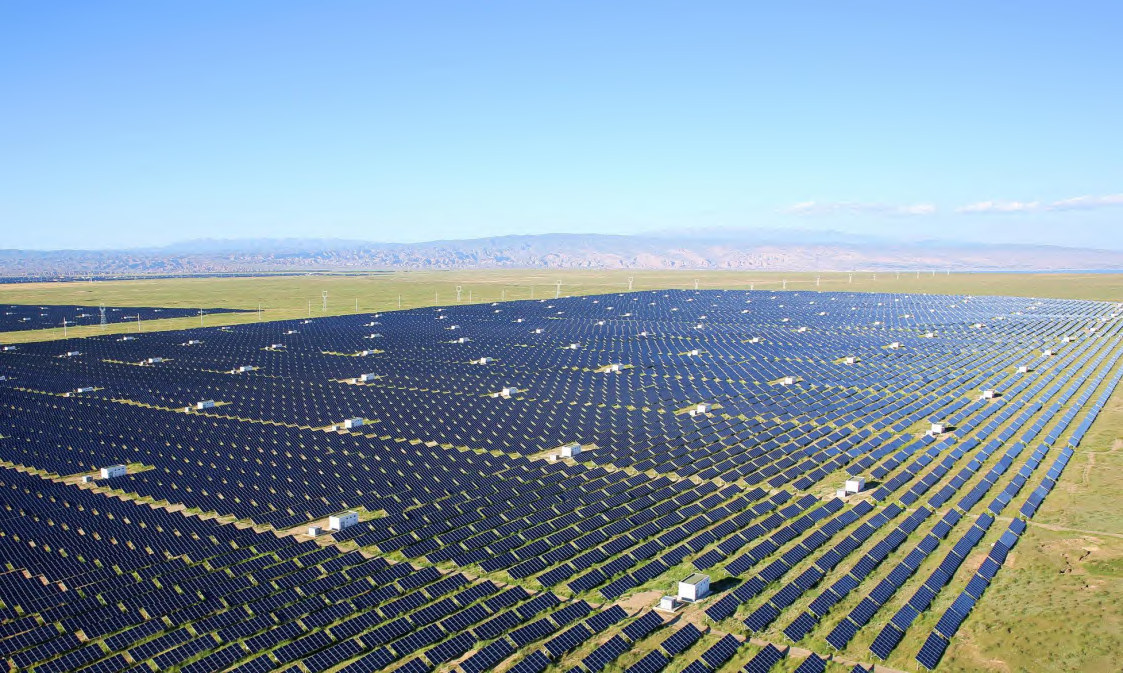
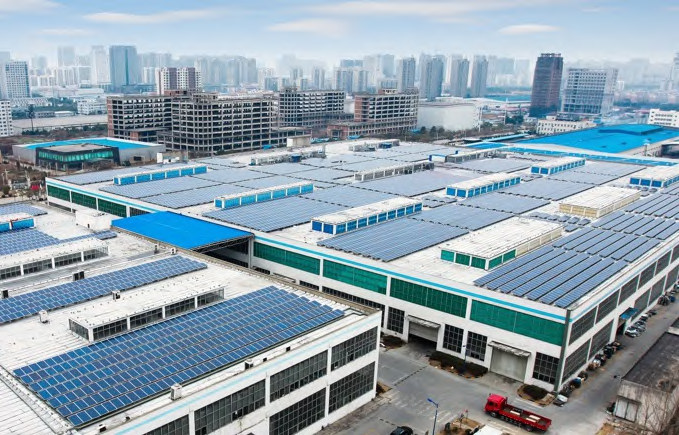
Utility-scale solar array under construction
Export supply · Jinhua, Zhejiang · FOB China

N-type TOPCon modules for 1–20 MW projects.

600–740 W bifacial glass-glass, in three formats — including a dust-shedding frame built for arid roofs.

We supply importers, EPC contractors and distributors working on commercial rooftops, industrial self-consumption plants and off-grid solar-diesel-storage. You get the datasheet, the IEC certificates and a container-level landed cost before you commit to anything.

600–740 WPower range
23.50 %Peak module efficiency
30 yrLinear power warranty
470–537 kWPer 40 ft HQ
Choose your format

Three formats, three different jobs

Pick by site condition, not by wattage. A 740 W module that cannot be carried onto a roof, or that overloads the inverter's MPPT input, costs you more than the extra watts earn you.

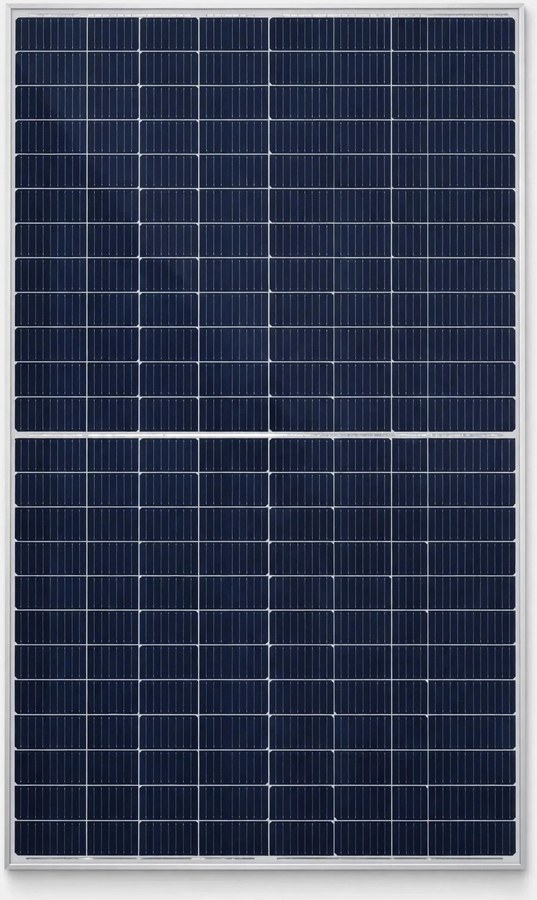
182R-66 635 W N-type TOPCon bifacial module, anti-dust frame
Best for dusty sites

182R · 66

RM-635W-182R/132TB · 600–635 W
  • Efficiency23.50 %
  • Weight33.5 kg
  • Size2382 × 1134 × 30 mm
  • Impp15.02 A
  • Modules / 40′HQ740
  • DC per container≈ 470 kW

The only format with the anti-dust edge. Lightest to handle by hand on rooftops. Best inverter compatibility of the three.

Quote this format
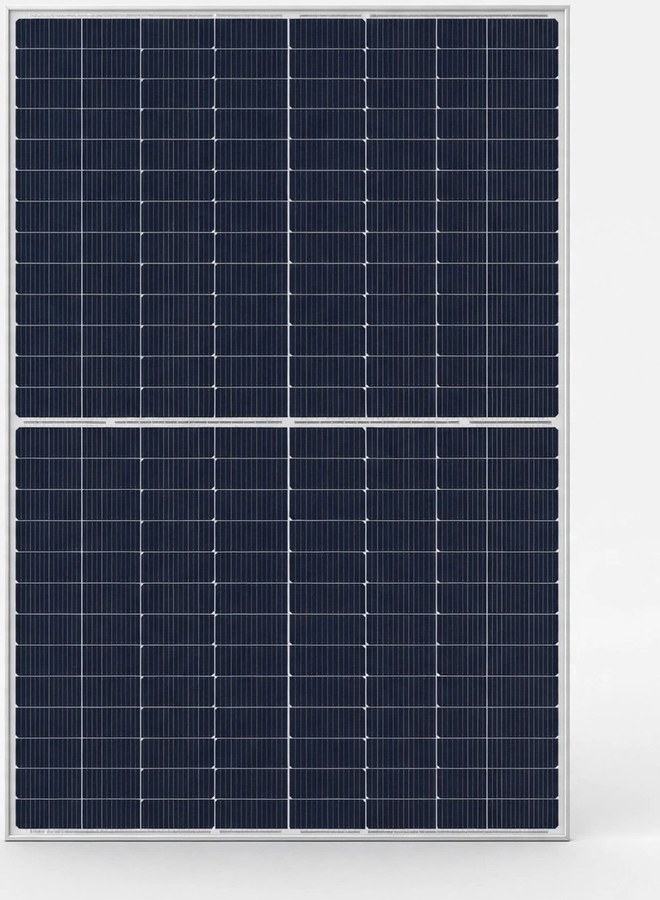
210-66 730 W N-type TOPCon bifacial module
Best cost per watt

210 · 66 Bifacial

RM-730W-210M/132TB · 700–730 W
  • Efficiency23.50 %
  • Weight37.5 kg
  • Size2384 × 1303 × 33 mm
  • Impp17.52 A
  • Modules / 40′HQ726
  • DC per container≈ 530 kW

Highest DC watts per container — lowest freight and mounting cost per watt. Needs a 40 A+ per-MPPT inverter and mechanical lifting. Read the compatibility note below.

Quote this format
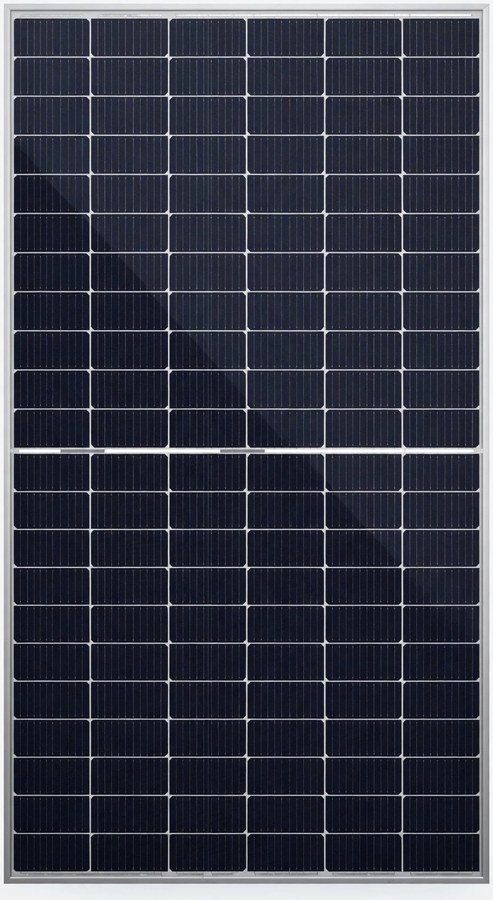
210R-78 740 W N-type TOPCon bifacial module
Best for tight land

210R · 78 Bifacial

RM-740W-210R/156TB · 715–740 W
  • Efficiency23.00 %
  • Weight38.5 kg
  • Size2465 × 1303 × 33 mm
  • Impp15.00 A
  • Modules / 40′HQ726
  • DC per container≈ 537 kW

Largest area (3.212 m²) and highest power per module. Voc 58.21 V needs a fresh string calculation on 1100 V systems. Good for land-constrained C&I.

Quote this format
Full electrical and mechanical data

Specifications at STC

Numbers below are taken from the current datasheets at electrical rating. Where a value differs between formats it is shown per format — nothing here is rounded up.

Parameter182R-66 · 635 W210-66 · 730 W210R-78 · 740 W
Max power (Pmax)600–635 W700–730 W715–740 W
Power steps8 bins, 5 W7 bins, 5 W6 bins, 5 W
Module efficiency23.50 %23.50 %23.00 %
Open circuit voltage Voc50.60 V49.80 V58.21 V
Short circuit current Isc15.95 A18.56 A16.19 A
Voltage at Pmax42.30 V41.70 V49.33 V
Current at Pmax Impp15.02 A17.52 A15.00 A
Isc with +10 % bifacial gain17.53 A20.42 A17.80 A
Pmax temperature coefficient−0.29 %/°C−0.30 %/°C−0.29 %/°C
Voc temperature coefficient−0.24 %/°C−0.25 %/°C−0.25 %/°C
NMOT45 ± 2 °C44 ± 2 °C44 ± 2 °C
Max system voltage1500 V DC1500 V DC1500 V DC
Series fuse rating30 A30 A35 A
Dimensions2382 × 1134 × 30 mm2384 × 1303 × 33 mm2465 × 1303 × 33 mm
Area2.701 m²3.106 m²3.212 m²
Weight33.5 kg37.5 kg38.5 kg
Cell type / count182 × 105 mm · 132 (6×11+6×11)210 × 105 mm · 132 (6×11+6×11)210 × 91 mm · 156 (6×13+6×13)
Glass2.0 mm anti-reflective tempered front + 2.0 mm tempered rear (double glass)
Frame / junction boxAnodised aluminium alloy · IP68 junction box, 1500 V DC · MC4-compatible connectors
Operating temperature−40 °C to +85 °C
Packing37 pcs/box × 20 boxes · 1270 kg gross/box33 pcs/box × 22 boxes · 1280 kg gross/box33 pcs/box × 22 boxes · 1327 kg gross/box
Load per 40 ft HQ740 pcs · ≈470 kW · 25.4 t726 pcs · ≈530 kW · 28.2 t726 pcs · ≈537 kW · 29.2 t
Power tolerance is positive. Modules are shipped at or above the nameplate bin — you are never billed for a watt you did not receive. Test reports and the batch COA are issued with the shipment.
The part most suppliers skip

String and inverter fit

High-current modules quietly break designs. The number that matters is the inverter's maximum DC input current per MPPT, checked against module Isc — not Impp — multiplied by the number of parallel strings. Bifacial gain adds roughly another 10% on top. We check this against your inverter datasheet before quoting, not after delivery.

FormatIsc at STCIsc + 10 % bifacialOne stringTwo strings in parallelMinimum per-MPPT rating
182R-6615.95 A17.53 A17.5 A35.1 A36 A if double-stringed
210R-7816.19 A17.80 A17.8 A35.6 A36 A if double-stringed
210-6618.56 A20.42 A20.4 A40.8 A41 A if double-stringed
Read this before you copy a string design across formats. On an inverter limited to 30 A per MPPT, all three formats must be single-stringed once bifacial gain is counted — double-stringing overruns the input. That is workable, but it means more MPPT channels for the same DC size, so the cheapest module per watt can end up the more expensive system. The 210-66 format is the most demanding: it needs 40 A+ per MPPT to be double-stringed at all. Send us your inverter make and model and we will tell you which format actually costs you less installed.

Voc and cold-weather strings

210R-78 runs 58.21 V per module. On a 1100 V system, corrected to −10 °C, that caps the string at 16 modules. Tell us your site's design ambient temperature and we will send the string length, not a guess.

Snow and wind load

The formats pass 2400 Pa wind and 5400 Pa snow under IEC 61215. Those are test-pass values, not design allowances. On large formats in snow load above 1.5 kN/m², have a structural engineer verify purlin spacing — we will supply the load data sheet for it.

Handling and breakage

33.5 kg is a two-person carry. 37.5–38.5 kg on a 3.1–3.2 m² panel needs suction lifters on rooftops. Larger formats also carry a higher transit breakage rate, so we cap it contractually at ≤0.3% with free replacement of the excess.

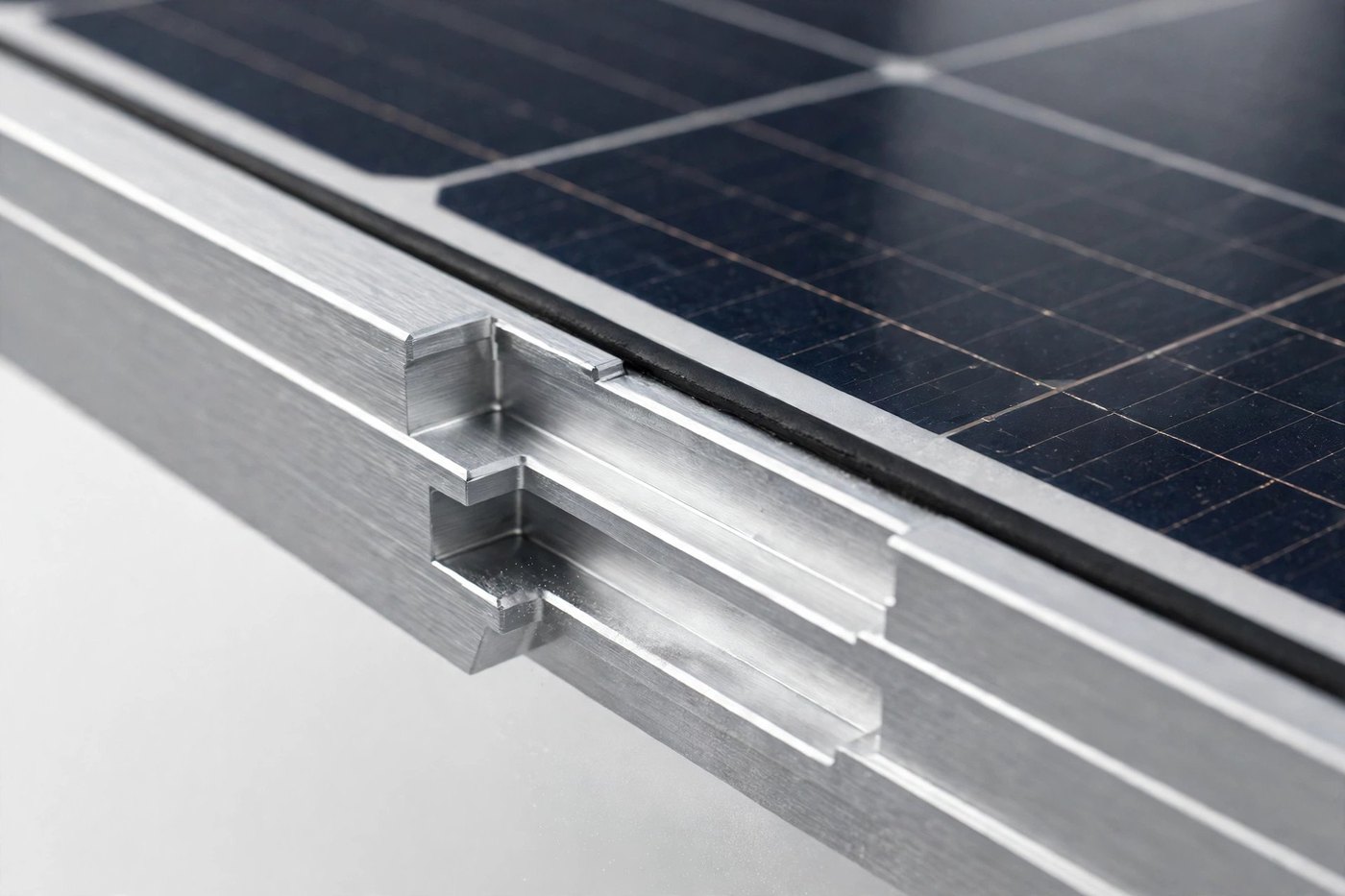
The anti-dust frame is a real gain, not a brochure claim. On the 182R format, the raised edge profile reduces water-borne dirt accumulation at the short edge. Independent field results for this class of frame sit around 1–3% additional yield, and the value depends on rainfall, tilt and dust type. In arid, low-rainfall sites with soiling losses, that is the difference between a 5-year and a 6-year payback. It is also the reason we lead with this format in the Gulf.
Where these formats go

Three site types we quote for

The format you choose follows the site, not the budget. Below is what each segment actually looks like — so you can match the array to the ground under it.

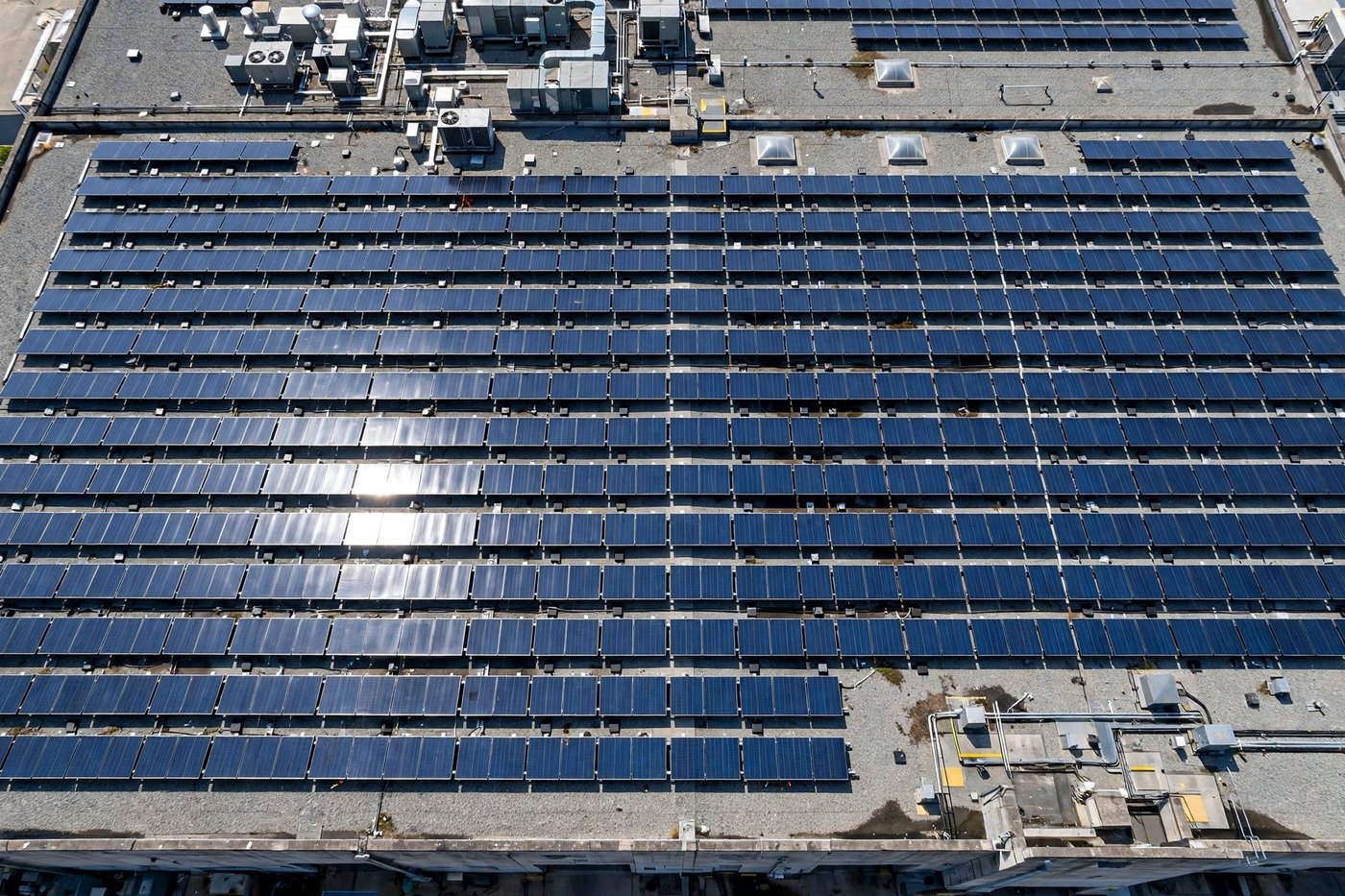
Commercial and industrial rooftop array
Commercial & industrial rooftop. 1–5 MW typical, 1100 V strings, existing roof structure. The 182R format wins here: 33.5 kg is a two-person carry onto a roof.
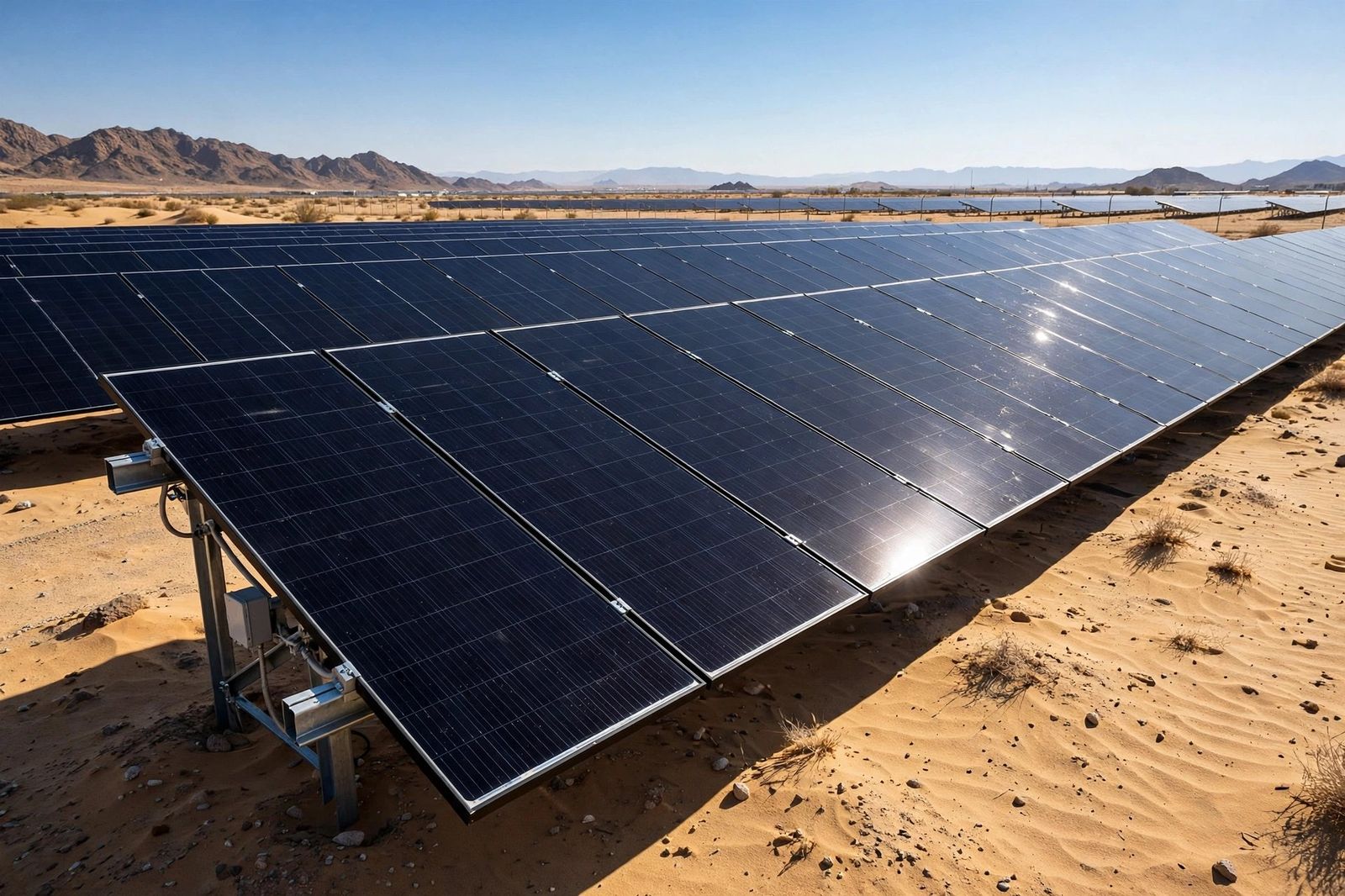
Ground-mounted array in arid terrain
Ground-mount in arid terrain. Gulf, North Africa, Central Asia. Soiling and heat dominate the yield model — the anti-dust frame and the −0.30 %/°C coefficient both matter.
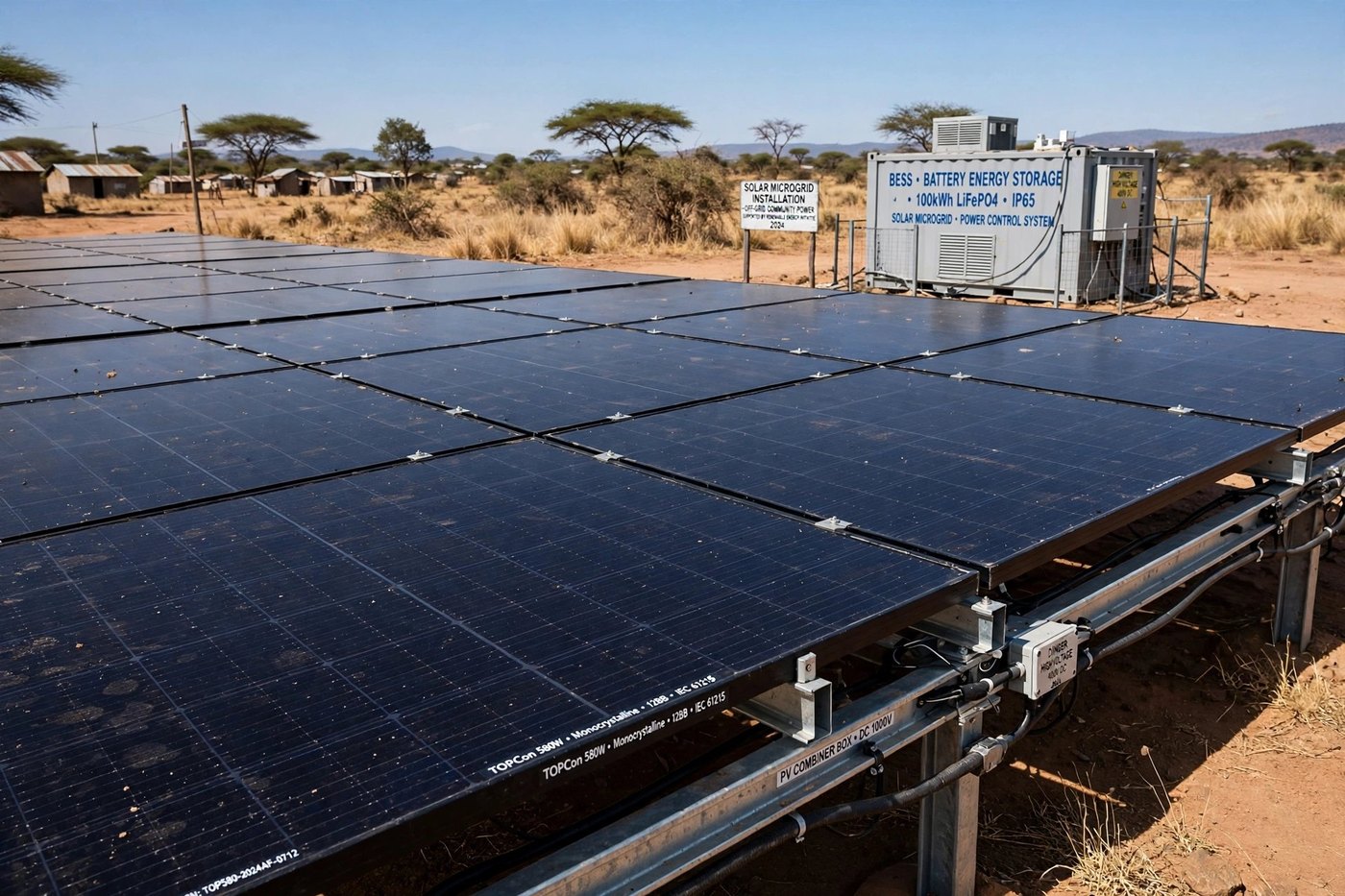
Off-grid solar and battery microgrid
Off-grid and hybrid microgrid. Telecom sites, remote settlements, mining camps. 1–20 MW with storage; the array size is set by the battery autonomy, not by roof area.
About these three images. They are illustrations of the site type — as is the banner image at the top of this page — not photographs of projects we delivered. We do not present rendered or stock imagery as our own track record. For real reference installations, ask us and we will send the project list with photographs and commissioning dates — subject to the end client's permission.

Component detail

Close-up of module frame with anti-dust profile
Anti-dust frame (182R only). The raised short-edge profile lets rain carry soiling off the glass instead of trapping it at the bottom rail. Independent field data for this frame class sits at 1–3 % additional yield, depending on rainfall, tilt and dust type.
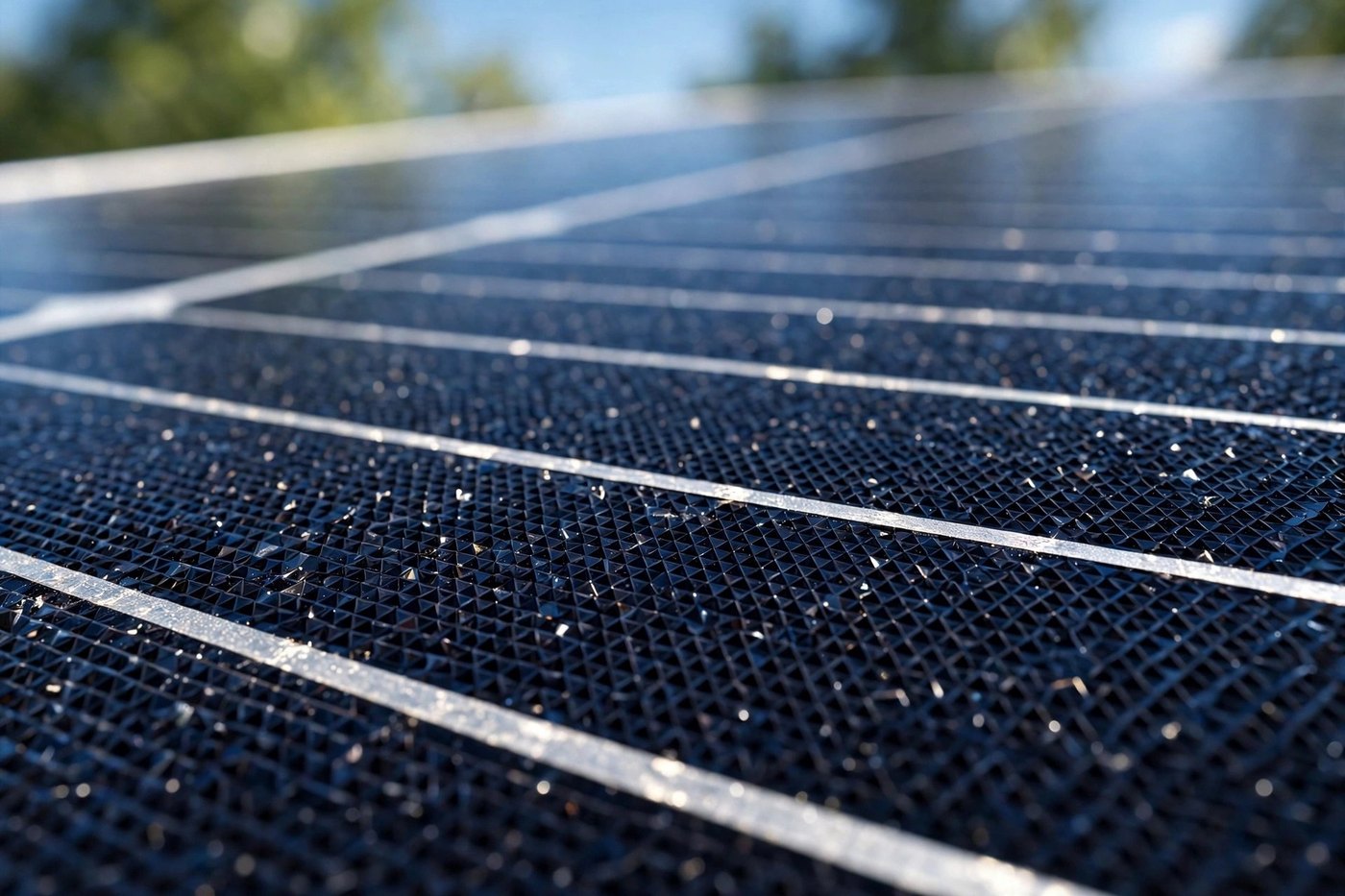
Close-up of N-type TOPCon cell surface
N-type TOPCon cell surface. Fine busbar spacing and the passivation stack are what separate a 23.50 % module from a 21 % one. This is the same cell platform across all three formats.
Where these are made

A TOPCon line you can audit

PeakArray is an export operation working with a TOPCon manufacturing base in Jinhua, Zhejiang, China. The producer of record on export documents is that facility. Your contract, your documents and your quality recourse sit with PeakArray — one point of contact.

Ground-mounted solar plant
Reference ground-mount installation by the manufacturing partner.
Commercial rooftop solar installation
Commercial rooftop array — the segment these formats are sized for.

Quality controls you can test

  • Two full EL (electroluminescence) inspections per module
  • Per-module serialisation, traceable for the module's life
  • AI inline inspection plus six QC gates
  • Batch COA and IV test report with every shipment

Certifications held

IEC 61215 design qualification IEC 61730 safety qualification IEC 61701 salt mist corrosion IEC 62716 ammonia corrosion ISO 9001 quality ISO 14001 environmental ISO 14064 GHG verification CE / CQC TÜV NORD salt mist & ammonia test reports
What we do not claim. These modules are not UL-listed, so we do not sell into the United States. There is no EPD, no WEEE registration and no IEC 62938 non-uniform snow-load certification at the time of writing — if your tender requires any of those, we will tell you plainly instead of bidding and losing your deposit. We also do not claim a bankability tier: this is a value play, not a project-finance play.
How an order runs

Four steps, no surprises

Tell us the site

Country, segment (rooftop / ground / off-grid), DC size, inverter make and model, design ambient temperature.

We quote and check fit

FOB or CIF price per watt, container count, string design, and an honest flag if a format does not suit your inverter.

You inspect before paying the balance

Third-party pre-shipment inspection (SGS / BV / TÜV) at AQL 2.5, EL sampling, loading filmed container by container.

Ship and document

Bill of lading, packing list, certificate of origin, batch COA, and the warranty certificate in English, assignable to your end client.

Commercial terms

What buyers ask first

Payment

  • First order30% T/T deposit, 70% against B/L copy
  • Alternative100% irrevocable L/C at sight
  • Not offeredOA / D/A / D/P at usance

Payment goes to a corporate account in the same name as the contract party. We will never ask you to pay an individual or a third-party account.

Delivery

  • PortFOB Qingdao / Shanghai
  • Also quotedCIF / CFR to your discharge port
  • Split deliveryAvailable on orders above 20 MW

Lead time is confirmed in writing at order stage. Our production partner runs below full capacity, so orders that need faster turnaround than a tier-one queue can usually be accommodated.

Warranty

  • Product12 years
  • Linear power30 years
  • Year 1 degradation≤ 1%
  • Annual thereafter≤ 0.4%
  • Year 30 output≥ 87.4%

The warranty certificate is issued in English and is assignable to the end owner. Ask us for the group-level guarantee wording before you sign — we will show you exactly what the obligor is.

ItemDetail
Packing25 kg / 1-tonne options not applicable — modules ship in steel-free export crates, 33 or 37 pcs per box depending on format
Container load182R: 740 pcs ≈ 470 kW · 210: 726 pcs ≈ 530 kW · 210R: 726 pcs ≈ 537 kW
Customs codeHS 8541.43 (photovoltaic AC cells assembled in modules / DC). Final classification to be confirmed with your broker and destination tariff schedule.
OriginPeople's Republic of China. Certificate of origin, Form A or Form E (ASEAN/RCEP) provided with the shipment.
Private labellingNeutral packing and customer-brand nameplate available. Subject to trademark authorisation and minimum quantity — ask before you print anything.
SamplesSample and freight terms on request. Video factory audit available before any sample spend.
A note on destination duties. Solar is the most trade-remedied category in the world. Chinese-origin modules face layered measures in the United States (Section 301, AD/CVD and UFLPA), and India applies ALMM restrictions plus high duty. We do not ship to the United States in any form. For other destinations, confirm your own import duty before you compare our FOB price with a local quote — the landed number is the only one that matters.
Straight answers

Frequently asked

Are you the factory?

No. PeakArray is an export operation. We work with a TOPCon manufacturing base in Jinhua, Zhejiang. The producer of record on the export documents is that facility; your contract, your payment terms and your quality claim all sit with PeakArray.

We can arrange a live video walk-through of the cell and module lines, or an on-site audit scheduled with the factory. Ask and we will set it up.

Why is your price below the tier-one brands?

Because our partner is a second-tier brand selling on cost and flexibility rather than on brand premium. The realistic gap is in the 5–12% range on export pricing depending on volume and destination.

If the gap on your enquiry is under about 5%, we will usually tell you to buy the tier-one module instead. Below that threshold the bankability, longer product warranty and faster global service network are worth more than the difference.

Is this a bankable module?

Honestly: not for Western project finance. The manufacturer is not on the BNEF Tier 1 list and is not a PVEL Top Performer. If your tender names either of those, do not use us — you will be disqualified on eligibility.

For an owner-builder, a commercial rooftop, an off-grid mini-grid or a government small project where the money is your own, that distinction costs you nothing and the price gap is real.

Can you put our brand on the modules?

Private labelling is available, subject to the manufacturer's authorisation and a minimum quantity. Two things must be settled in writing first: who owns the trademark risk, and who carries the patent indemnity on the TOPCon cell process. We will not print labels before both are documented.

What documents do we get before paying?

Current datasheet with version number and effective date, IEC 61215 / 61730 / 61701 / 62716 certificates, ISO certificates, a sample batch COA, and the BOM list (glass thickness, frame wall, encapsulant type and weight, junction box and connector brand). We send these on request, free, before any deposit.

Ask for the datasheet version number specifically. The market has older sheets in circulation with superseded figures.

How do you handle transit breakage?

Contract cap of 0.3% including micro-cracks, assessed by EL sampling within 7 days of arrival. Excess is replaced free within 15 days at the supplier's freight cost. Loading and unloading are filmed container by container so the evidence exists before anyone argues.

Which format should we stock?

If you serve rooftops, dusty sites, or inverters with modest per-MPPT current headroom: the 182R-66 — it is the lightest to handle, the only one with the anti-dust edge, and the most forgiving on string design. If you serve large flat ground-mount where freight per watt dominates and your inverters accept 40 A+ per MPPT: the 210-66. If land is scarce and expensive: the 210R-78, but re-run the string voltage first.

Send us your inverter model and site conditions and we will make the call with you on a call, not from a spec sheet.

Do you sell to the United States?

No. No UL listing, and the combination of Section 301, AD/CVD and UFLPA makes it uneconomic and unwise. We also do not route through third countries to dodge those measures.

Start here

Tell us the project

Send the site, the size and the inverter. We reply within one working day with a price per watt, a container plan, and a straight answer if the format does not fit.

✓ Inquiry received. We reply within one working day — check your spam folder if nothing arrives.

We reply from a @peakarray.com address. No newsletter, no third-party marketing.

Prefer email or WhatsApp?

Write to [email protected] with your country and DC size. Include your WhatsApp number if you want a faster reply — we work across Gulf and African time zones.

What to attach, if you have it

  • Single-line diagram or inverter datasheet
  • Tender eligibility criteria (so we can tell you early if we do not qualify)
  • Target commissioning date
  • Destination port, for a CIF number
First-order trial lots welcome. If you want to test the modules before committing a container, say so — we would rather ship a small verified lot than argue about a large untested one.
Response promise. One working day for a priced reply. If we need longer — for instance to confirm a private-label minimum with the factory — we tell you that on day one instead of going quiet.
Data

Privacy

We collect only what you type into the form above: company, name, email, country, segment, format, quantity, inverter and message. It is used to price and answer your enquiry, and nothing else. Submissions are stored on Cloudflare infrastructure in a private namespace and emailed to our own inbox — no third-party form service, no advertising pixels, no analytics cookies on this site. We do not sell or share enquiry data. On request we will delete your submission and confirm it was deleted; write to [email protected]. You may ask to access, correct or erase your data at any time.